Smart Home Devices That Improve Efficiency
Valentina Marino September 30, 2025
Smart home devices that improve efficiency are no longer just about convenience—they’re becoming the foundation for major energy savings and environmental impact in 2025. One of the most disruptive trends is the rise of AI-powered home energy management systems (HEMS), which are designed to orchestrate everything from heating to battery usage in real time.
These systems act like the brain of your house, making energy decisions across multiple connected devices to ensure optimal performance. And with energy costs climbing and utility grids under stress, the timing couldn’t be better.
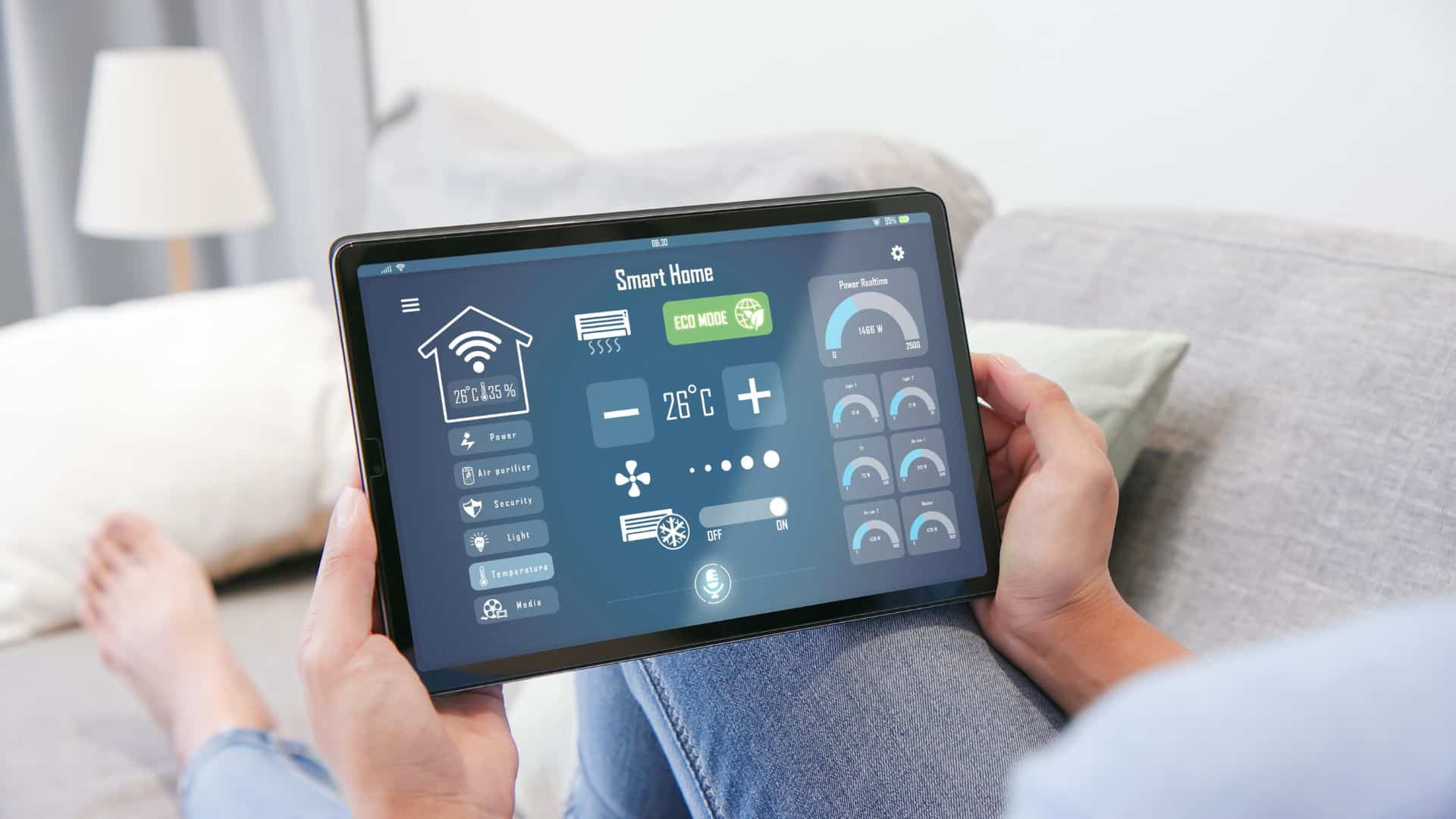
Why AI Energy Orchestration Is the Future of Smart Homes
While smart thermostats and smart plugs have laid the groundwork, 2025 marks a tipping point: AI is now sophisticated enough to manage entire households of connected devices, energy storage units, and renewable sources.
This shift is driven by a few key trends:
- Volatile energy pricing: Utility providers are increasingly using time-of-use pricing.
- Widespread solar and battery adoption: More homeowners are generating and storing their own power.
- Improved device interoperability: Standards like Matter are finally making cross-platform control seamless.
- Advanced predictive analytics: AI models now forecast weather, usage, and grid conditions with high accuracy.
The result is a coordinated system that can shift loads, store energy, and reduce waste—all without constant human intervention.
Smart Energy Management Systems: How They Work
AI-driven energy management systems are designed to monitor, predict, and control energy usage across your entire home. These systems typically include:
- A central energy controller (either hardware or cloud-based)
- A network of smart devices (thermostats, lighting, appliances)
- Renewable energy sources (like solar panels) and home batteries
- Real-time data feeds (pricing signals, weather forecasts, occupancy sensors)
By combining this data, the system can make instant decisions, like charging your home battery when solar output is high or turning off non-essential loads during expensive peak times.
For example, a system might pre-cool the house before a heatwave, using cheaper midday solar energy, and then minimize AC usage during the expensive 5–9 PM window.
Key Benefits of AI-Orchestrated Smart Homes
1. Energy Cost Savings
Smart energy management systems can reduce utility bills by intelligently scheduling energy use during off-peak periods. Research shows average savings of 15–25% for homes using advanced HEMS (Simcore Partners, 2023).
2. Enhanced Energy Independence
By managing how and when home batteries are charged or discharged, AI systems allow you to rely less on the grid. In case of outages, they can also prioritize essential appliances, increasing your home’s resilience (Brimstone Energy, 2023).
3. Lower Carbon Footprint
Optimizing when you use grid power versus renewables can substantially reduce emissions. AI can also limit use of carbon-intensive appliances during high-emission periods identified by grid providers.
4. Grid Participation and Demand Response
AI systems can participate in demand response programs, where homes voluntarily reduce load during grid stress and get paid in return. This transforms your home into a “virtual power plant” contributing to grid stability.
Building an AI-Optimized Smart Home: Step-by-Step
If you’re considering upgrading your smart home for energy efficiency, here’s a roadmap to help you adopt energy orchestration effectively.
Step 1: Choose an Energy Controller or HEMS Platform
Look for platforms that support deep energy analytics, device integration, and machine learning. Options range from commercial systems to open-source solutions like Home Assistant.
Step 2: Connect Your Smart Devices
Ensure your devices—thermostats, lights, appliances—are compatible with your energy controller. Devices using the Matter 1.4 standard are more likely to be interoperable.
Step 3: Add Solar and/or Battery Storage
While not mandatory, solar panels and batteries significantly enhance energy flexibility. Smart homes with energy storage can “time-shift” consumption and rely less on the grid.
Step 4: Set Energy Goals and Load Prioritization
Decide what matters most: cost savings, comfort, or sustainability. Rank your appliances by priority so the system knows what can be paused or powered down.
Step 5: Enable Automation Rules and AI Learning
Let the system learn from your habits and environmental conditions. Over time, it will get better at predicting your needs and adjusting accordingly.
Step 6: Monitor, Review, and Adjust
Most systems come with dashboards that let you track savings and performance. Use these insights to tweak settings or add automation.
Challenges to Consider Before You Begin
While the benefits of smart energy orchestration are clear, there are a few potential roadblocks.
Upfront Costs
Installing an energy controller, battery storage, and smart devices can be expensive. However, prices are falling, and rebates or tax incentives may be available in some areas.
System Complexity
Managing many devices through a single orchestration system can be complex. Opt for platforms with strong customer support or community backing.
Data Privacy
Smart homes generate a lot of sensitive data. Make sure your platform encrypts data and gives you control over sharing.
Behavior Change
Even the smartest systems can’t overcome human behavior completely. To maximize efficiency, you’ll need to align your own habits with the system’s recommendations.
Real-World Case Studies
A homeowner in the UK installed solar panels with a smart battery system in early 2024. Using a predictive HEMS, they reduced peak-time grid usage by 80% and cut monthly bills by 110 pounds (Brimstone Energy, 2023).
Another study used a hybrid machine-learning model to forecast energy demand and adjust appliance schedules in real time. This led to a 20% reduction in energy costs with minimal user intervention (ScienceDirect, 2023).
In the U.S., 93% of homes participating in demand response programs were able to reduce consumption during peak hours, showing how orchestrated systems can contribute to grid stability and household savings (Simcore Partners, 2023).
What the Future Holds
As device standards continue to unify, and AI models become more powerful, energy orchestration will become a built-in feature of smart homes rather than a luxury.
Government programs are also encouraging adoption, with grants, rebates, and tax credits making it more accessible. Many utility providers are beginning to offer discounts for homes that allow dynamic control over energy use.
By 2026, experts predict that over 60% of new homes in developed regions will come pre-equipped with smart energy systems. This is not just a passing trend—it’s the blueprint for the future of housing.
Final Thoughts
AI-powered home energy orchestration is no longer science fiction. It’s happening now, and it’s transforming how people live. With better efficiency, cost savings, and environmental impact, the smart homes of 2025 are setting a new standard.
Whether you’re upgrading your home or starting from scratch, investing in this technology will pay off in more ways than one. Efficiency is no longer optional—it’s becoming the new default.
References
- de Oliveira, J. F. L., de Mattos Neto, P. S. G., Siqueira, H. V., Santos, D. S. d. O., Jr., Lima, A. R., Madeiro, F., Dantas, D. A. P., Cavalcanti, M. d. M., Pereira, A. C., & Marinho, M. H. N. (2023). Forecasting Methods for Photovoltaic Energy in the Scenario of Battery Energy Storage Systems: A Comprehensive Review. Available at: https://www.mdpi.com (Accessed: 30 September 2025)
- Samende, C., Fan, Z., & Cao, J. (2022). Battery and Hydrogen Energy Storage Control in a Smart Energy Network with Flexible Energy Demand using Deep Reinforcement Learning. Available at: https://arxiv.org (Accessed: 30 September 2025)
- Chen, J., Zhang, X., & Wang, Y. (2024). Smart home energy management and power trading optimization in residential areas using demand response methods. Available at: https://www.nature.com (Accessed: 30 September 2025)

 Gardening Tips That Encourage Pollinator Growth