Interior Organization Ideas That Reduce Clutter
Valentina Marino September 30, 2025
In 2025, one goal dominates the interior design world: reduce clutter. Today’s organization trends are not about hiding your mess but creating systems that prevent it in the first place. By combining aesthetics, smart tech, and sustainability, homeowners are transforming their spaces into stress-free sanctuaries. In this guide, we’ll explore what’s hot right now in interior organization and how you can apply it in your own home—without needing a full renovation.
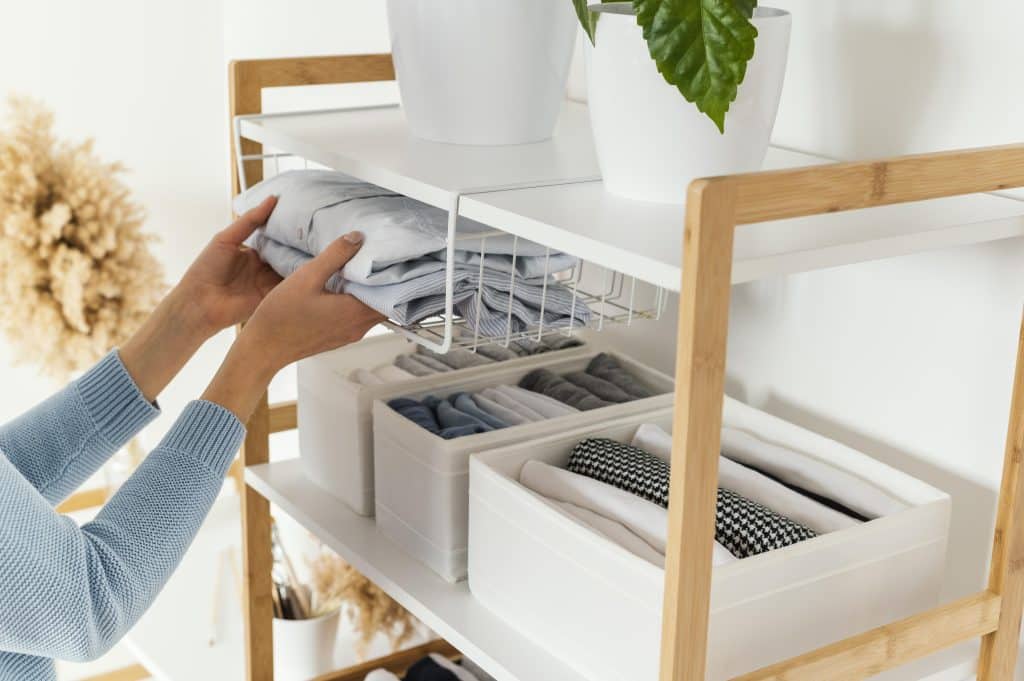
The 80/20 Storage Rule: Leave Space to Breathe
More homeowners are adopting the 80/20 rule—a deceptively simple concept: only fill your storage spaces up to 80%, leaving 20% empty. This trend is taking over social platforms and design forums because it creates not just tidiness, but flexibility.
Experts say that overfilling a space often leads to visual chaos and makes it harder to maintain over time. By using the 80/20 rule, you create a buffer that helps avoid constant reorganization (Better Homes & Gardens, 2024).
How to implement:
- In closets, resist cramming every inch. Leave space for items to move freely.
- Use the 20% buffer for future purchases or seasonal rotation.
- Label empty bins as “flex” to accommodate sudden additions without reworking your system.
This method isn’t just organizational—it’s psychological. Empty space offers relief to the eyes and brain. It encourages intentional living and helps reduce clutter before it builds.
Storage That Doubles as Décor
Why hide your storage when you can flaunt it? In 2025, a major trend is using storage as a design feature. This shift reflects a broader movement: treating organization not as an afterthought, but as a core part of interior styling.
We’re seeing:
- Woven baskets used as centerpieces
- Transparent bins filled with color-coded linens
- Modular bookshelves with built-in drawers
- Ottomans and benches that open up to reveal hidden compartments
When your storage looks good, you’re more motivated to use it. Designers agree that attractive, visible storage creates consistency and deters the “just toss it” habit that leads to clutter (LivingEtc, 2025).
Smart Home Integration for Daily Order
As homes get smarter, so does organization. New smart systems are being designed to support routines and reduce daily chaos—especially in high-traffic areas like kitchens, entryways, and bathrooms.
Emerging trends include:
- Voice-controlled inventory systems for pantry and fridge
- Motion-sensor lights inside closets and cabinets
- Smart drawers that automatically close after a certain time
- Digital sticky notes and virtual calendars projected onto walls
These innovations aren’t about luxury—they’re about usability. According to the Journal of Interior Design Technology, homes with integrated smart features reported 30% higher satisfaction rates in daily routine management (Thomas and Tian 2021). These tools reduce decision fatigue and keep clutter from ever forming.
Multi-Functional Furniture: The Comeback Hero
Smaller homes and rising property costs have sparked renewed interest in multi-functional furniture. From Murphy beds with hidden shelving to coffee tables that lift and reveal storage, modern pieces are expected to work twice as hard.
Popular choices for 2025:
- Sofas with built-in blanket drawers
- Dining tables with drop-leaf extensions and underneath shelving
- Beds with hydraulic lifts revealing storage compartments
- Vanity desks that convert into workstations
These are especially beneficial in apartments or homes without basements or attics. Smart furniture creates “hidden space” without any construction—reducing clutter while maintaining style.
Digital Decluttering is Now Part of Home Design
Your home isn’t only physical. Digital clutter is now officially on the home organizer’s radar. From misplaced files to thousands of unsorted photos, digital chaos spills into your physical world—especially in home offices or shared family computers.
Leading organizers recommend:
- Weekly inbox cleanups and desktop audits
- Organizing digital receipts and manuals into cloud folders
- Decluttering apps and widgets from smart TVs and tablets
- Syncing home inventory apps with garage or utility room contents
The result? Less visual and mental fatigue. Many interior psychologists now stress the importance of managing both tangible and digital clutter to achieve a calm space (Gulddal, 2020). As digital storage expands, intentionality becomes key.
Sustainability First: Eco-Friendly Storage Solutions
Today’s organizational upgrades must also meet eco-standards. The demand for sustainable storage has given rise to materials like bamboo, reclaimed wood, recycled metal, and biodegradable fabric bins.
Homeowners are increasingly avoiding single-use plastic organizers and opting for:
- Compostable drawer dividers
- Jute or hemp baskets
- Upcycled wooden crates as stackable shelving
- Reusable label systems instead of adhesive stickers
A survey by Green Home Lab (2024) revealed that 68% of respondents planned to replace at least one organizational product with a sustainable option within the next year. Not only are these materials better for the planet—they often look better, too.
Color-Coded Simplicity: More Than Just Pretty
Color-coded systems are booming in popularity not because they look neat—but because they make retrieval faster and increase accountability among household members. Whether it’s organizing kitchen spices, office supplies, or kids’ toys, using color as a guiding structure simplifies everything.
Common uses:
- Red bins for urgent documents
- Blue folders for medical records
- Green containers for seasonal items
- Yellow baskets for craft supplies
This method is also ideal for shared households or neurodiverse individuals who benefit from visual organization cues. Clutter disappears faster when there’s a color-matching system guiding your hand.
Final Tip: The Daily Reset Habit
Even with the best systems in place, clutter creeps in. That’s why professional organizers now emphasize the “daily reset”: a 10-minute habit where each household member resets their space before bedtime.
The technique works because:
- It’s short enough to be sustainable
- It trains your brain to value cleanliness
- It builds momentum that prevents “tidal wave” cleaning days
Research in behavioral psychology confirms that consistent micro-habits are far more effective than once-a-month overhauls (Abu Salem, Gemail, and Nosair, 2021). Keeping clutter away requires commitment, not just a good system.
Conclusion: Organizing for Life, Not Just Looks
In 2025, interior organization isn’t about Pinterest-perfect pantries or showroom closets. It’s about living better. From smart tech and eco-materials to daily resets and design-forward storage, everything is shifting toward systems that help people thrive.
Whether you’re in a studio apartment or a three-story house, the same rules apply: reduce clutter by making your space work for your life—not the other way around.
References
- Better Homes & Gardens. “5 Home Organizing Trends Experts Want You to Use in 2025.” Available at: https://www.bhg.com (Accessed: 30 September 2025)
- Hsu, Y.-L., Chou, P.-H., Chang, H.-C., Lin, S.-L., Yang, S.-C., Su, H.-Y., Chang, C.-C., Cheng, Y.-S., & Kuo, Y.-C. “Design and Implementation of a Smart Home System Using Multisensor Data Fusion Technology.” Available at: https://www.mdpi.com (Accessed: 30 September 2025)
- “Organizing Trends 2025: Plus the Ones We’re Leaving Behind.” Available at: https://www.homesandgardens.com (Accessed: 30 September 2025)

 Fitness Challenges That Are Fun for Families