Steps to Organize Your Garden for Year-Round Growth
Valentina Marino September 18, 2025
If you want fresh vegetables, vibrant flowers, and thriving herbs every season, organizing your garden for year-round growth is essential. With smart planning, sustainable practices, and modern tools, you can transform your backyard into a continuous producer of food and beauty. The key is strategy—not size.
Why Year-Round Gardening Matters
Most people see gardening as a spring and summer activity. But with climate changes, new plant varieties, and innovative growing methods, maintaining a productive garden year-round has become more accessible.
Benefits include:
- Fresh, chemical-free food at any time of year.
- Reduced grocery bills and dependence on store produce.
- Improved soil health and biodiversity through continuous cover.
- A consistent, rewarding hobby that supports mental health.
The U.S. Department of Agriculture reports that more home gardeners are turning to raised beds, cold frames, and succession planting to extend harvests and adapt to unpredictable weather patterns (USDA 2023).
Step 1: Plan Your Garden Layout for All Seasons
A successful year-round garden starts on paper. Without a clear plan, many gardeners face gaps between harvests or find themselves unprepared for seasonal transitions.
Tips for layout:
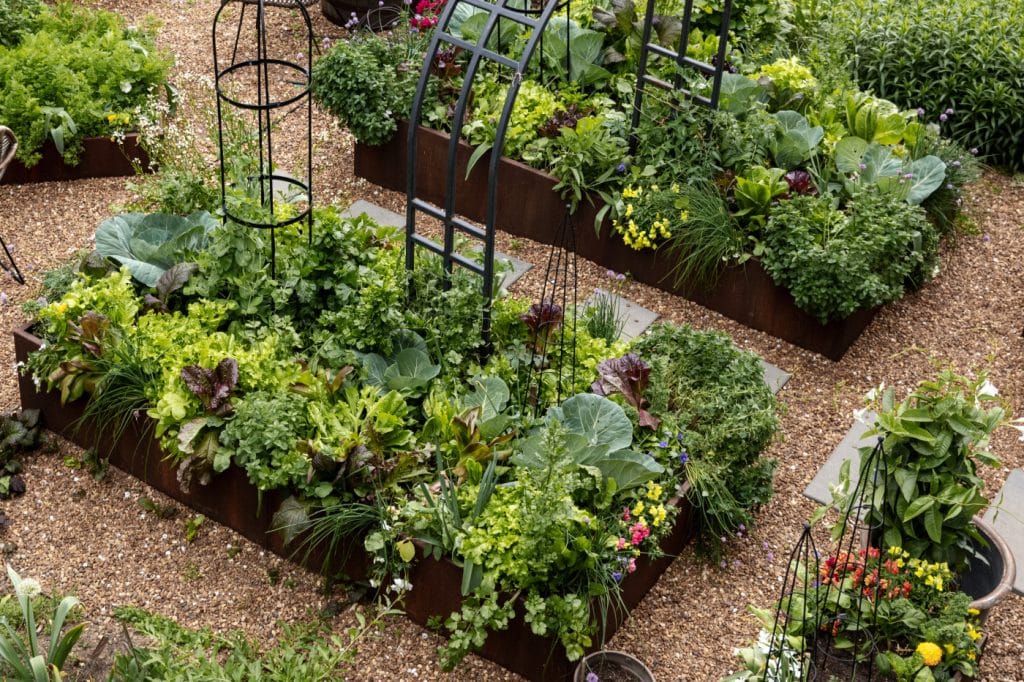
- Divide your garden into zones: cool-season crops, warm-season crops, and perennials.
- Position raised beds or rows to maximize sunlight in winter when daylight is shorter.
- Install pathways to reduce soil compaction and make maintenance easier.
- Consider companion planting—pairing crops like tomatoes and basil or carrots and onions to improve growth and deter pests.
Research from the University of Minnesota Extension shows that rotating crops and planning seasonal spaces reduces soil-borne diseases and improves productivity (University of Minnesota, 2022).
Step 2: Use Season-Extending Tools
To keep crops alive beyond their normal growing season, season extenders are essential. They protect plants from frost, heat, and pests, enabling multiple harvests throughout the year.
Practical options:
- Cold frames: Small, clear enclosures that trap heat and protect tender greens in late fall or early spring.
- Row covers: Lightweight fabric shields that protect against insects and temperature swings.
- Greenhouses and hoop houses: Larger structures that allow tomatoes, peppers, and herbs to thrive even in colder months.
- Mulch and straw: Affordable ways to insulate soil and regulate moisture.
With these tools, crops like kale, spinach, and carrots can be harvested even during snowy winters.
Step 3: Choose the Right Plants for Each Season
Plant selection is one of the most important steps to organize your garden for year-round growth. Some plants thrive in heat, while others need cool weather to develop properly.
Seasonal examples:
- Spring & Fall: Radishes, spinach, lettuce, peas, arugula.
- Summer: Tomatoes, cucumbers, zucchini, beans, eggplant.
- Winter (with protection): Kale, garlic, carrots, cabbage, Brussels sprouts.
Seed companies now offer climate-adapted varieties that tolerate frost or heat better. Johnny’s Selected Seeds, for example, sells cold-hardy lettuces bred for winter harvesting (Johnny’s Selected Seeds, 2023).
Step 4: Practice Succession Planting
Succession planting is one of the most powerful techniques to maximize garden output. Instead of planting once and leaving soil bare, you replant the same space multiple times a year.
Example cycle in one bed:
- Early spring: Radishes (30 days).
- Early summer: Green beans (60 days).
- Fall: Spinach (45 days).
- Winter: Garlic planted for next year’s harvest.
By staggering plantings, you avoid the feast-and-famine problem of home gardening and keep your soil working continuously.
Step 5: Improve and Protect Your Soil
Healthy soil is the foundation of year-round gardening. Without careful replenishment, soil loses nutrients, and crops weaken.
Ways to protect soil health:
- Add compost after every harvest to restore nutrients.
- Use mulch to regulate temperature and reduce water evaporation.
- Plant cover crops like clover or rye in winter to prevent erosion and add organic matter.
The USDA’s Natural Resources Conservation Service emphasizes that cover cropping improves nitrogen levels and reduces erosion during off-seasons (NRCS 2022).
Step 6: Embrace Smart Gardening Technology
Technology is changing how we grow food at home. Smart devices make year-round gardening more manageable, even for beginners.
Tech tools worth considering:
- Smart irrigation systems that adjust water flow based on soil moisture.
- Soil sensors to track pH and nutrient levels in real time.
- Planting apps that send reminders about sowing and harvesting based on your climate zone.
- LED grow lights for indoor growing, extending the season for herbs and leafy greens.
Emerging trends like indoor hydroponics and vertical gardening mean that even urban dwellers can maintain “gardens” in winter.
Step 7: Create a Maintenance Routine
Consistency is what separates successful year-round gardeners from frustrated ones. Without routine care, weeds, pests, and irregular watering can undo months of effort.
Organization strategies:
- Maintain a garden journal with planting dates, harvest times, and notes.
- Use a seasonal calendar to track crop rotations.
- Set reminders for tasks like fertilizing or switching row covers.
- Walk your garden regularly—early detection of pests or disease prevents major losses.
Think of your garden as a system: when every part is monitored and maintained, productivity continues smoothly.
Step 8: Incorporate Perennials for Stability
Annual crops need replanting each year, but perennials provide long-term stability. Adding them to your garden reduces workload and ensures something is always growing.
Great perennial choices:
- Herbs: Thyme, rosemary, oregano.
- Fruits: Strawberries, blueberries, rhubarb.
- Vegetables: Asparagus, artichokes.
These plants create a reliable base for your garden while you rotate annual crops around them.
Step 9: Adapt to Climate Change and Local Conditions
Climate unpredictability makes organizing your garden for year-round growth even more important. Unseasonable frost, heat waves, and droughts can wipe out unprotected crops.
Adaptation strategies:
- Keep frost cloths and shade covers handy.
- Install rain barrels for water collection.
- Grow region-specific varieties recommended by your local extension service.
By planning ahead, your garden stays resilient despite unpredictable conditions.
Conclusion
Organizing your garden for year-round growth isn’t about having the biggest plot or spending hours each day. It’s about planning layouts, choosing the right crops, extending seasons, protecting soil, and using technology to your advantage. With these strategies, you can enjoy fresh produce, vibrant flowers, and thriving herbs every month of the year. Whether you’re harvesting kale in January or tomatoes in December, your garden can become a steady source of food, health, and joy.
References
- U.S. Department of Agriculture (2023). Home Gardening Trends in America. Available at: https://www.usda.gov (Accessed: 18 September 2025).
- University of Minnesota Extension (2022). Crop rotation and soil health in home gardens. Available at: https://extension.umn.edu (Accessed: 18 September 2025).
- Natural Resources Conservation Service (2022). Cover Crops and Soil Health. USDA NRCS. Available at: https://www.nrcs.usda.gov (Accessed: 18 September 2025).

 How Marketing Trends Influence Consumer Behavior